The Human Dimensions of Municipal Habitat Stewardship in Newfoundland and Labrador
Webinar Overview
Zachary Burrows, Executive Director
Stewardship Association of Municipalities (SAM) Inc.
Jonathan Sharpe, Habitat Ecologist
Wildlife Division, Newfoundland and Labrador Department of Fisheries, Forestry and Agriculture
In this virtual presentation, Zach and Jonathan will provide an overview of municipal habitat stewardship in Newfoundland and Labrador. Municipalities manage large areas of land, some of which is productive wildlife habitat. The Wildlife Division, Department of Fisheries, Forestry and Agriculture, and the Stewardship Association of Municipalities (SAM) Inc. work in partnership to identify wildlife habitat and to encourage municipalities in conservation efforts through public habitat stewardship agreements and provisions in Municipal Plans and Development Regulations. Since the first agreement signed in 1993, SAM has supported over 50 communities in NL, helping to conserve approximately 70,000 acres of important biodiverse habitat.
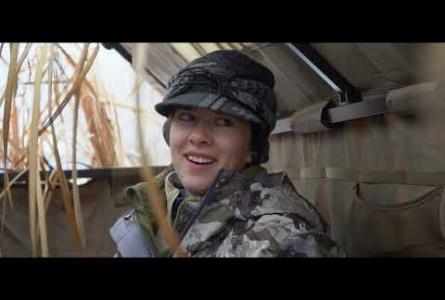
Forty years ago, North American waterfowl were in serious decline. Today, most populations are thriving — doing better than any other group of birds on the continent. This film tells the story of how three nations chose collaboration over crisis, and what four decades of partnership have built: millions of acres restored, ecosystems sustained, and communities connected to the landscapes they depend on.
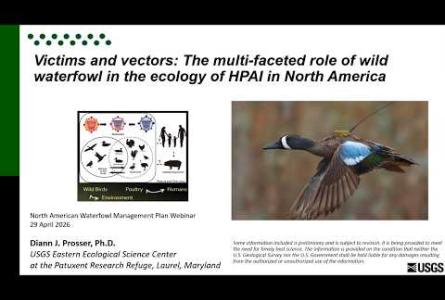
While wild waterfowl are the natural reservoirs of low pathogenic avian influenza, the incursion of highly pathogenic H5 into North America in the winter of 2021/2022 marked a dramatic shift in avian influenza ecology across the continent.
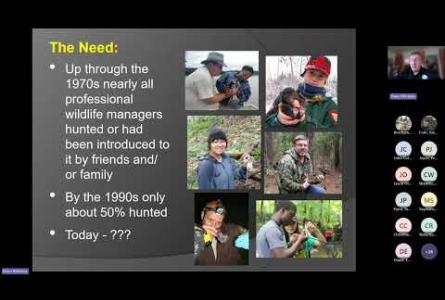
The conservation of waterfowl in North America depends not only on healthy waterfowl populations and habitats, but also on the support of hunters and other conservationists; yet, the number of active hunters has been in steady decline over recent decades.
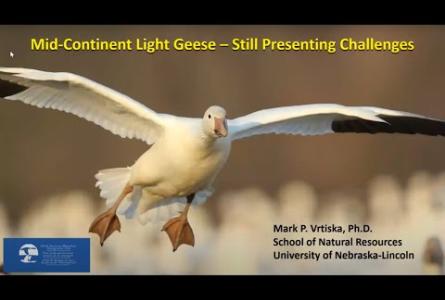
In the mid- to late 1990s, the mid-continent population of light geese (lesser snow and Ross’s geese) presented managers with a unique challenge in wildlife management, due to their overabundance and effects on northern habitats.
The Max McGraw Wildlife Foundation's Conservation Leaders for Tomorrow (CLfT) program was created in 2004 in a joint effort with the Wildlife Management Institute.
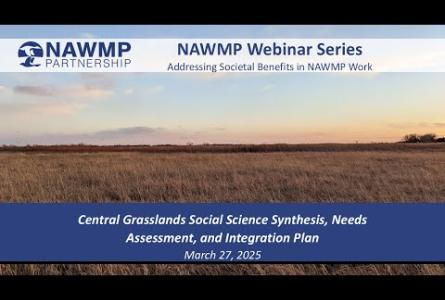
This webinar summarizes a recently completed synthesis report on social science related to Central Grasslands conservation efforts, funded by the tri-national Commission for Environmental Cooperation.
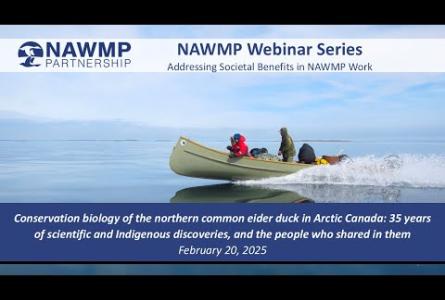
Drawing on 35 years of eider duck research in the Canadian Arctic, this presentation reviews a successful collaboration between Indigenous groups and waterfowl conservation programs.
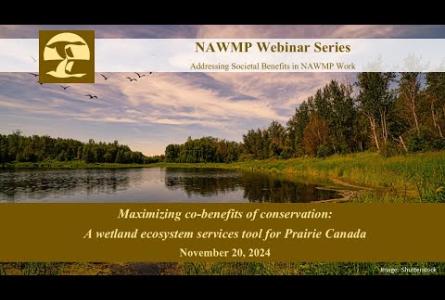
Ducks Unlimited Canada's Institute for Wetland and Waterfowl Research has developed a decision support tool to quantify carbon, biodiversity, water regulation and nutrient retention services from wetlands in Prairie Canada.
This project produced and distributed a series of integrated outreach and education products to increase awareness of the importance of wetlands in Nebraska.
This study surveyed Canadians about their willingness to donate to different conservation programs based on habitat type, bird conservation characteristics, location, and quantity of habitat conserved.
This survey of Canadians explores their attitudes, beliefs, and preferences about waterfowl and wetlands, adapting the Wildlife Value Orientations scale to wetlands specifically.
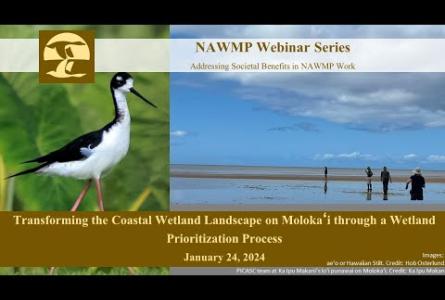
The Molokaʻi Wetland Partnership carried out a project to prioritize coastal wetlands of Molokaʻi for restoration, now funded and rolled out statewide.
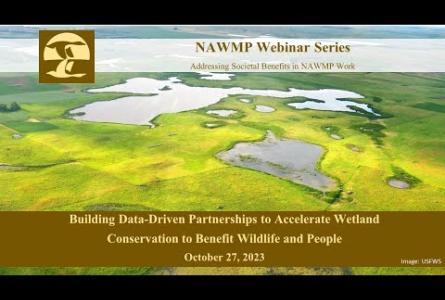
This presentation highlights specific examples of how data is being used to advance wetland conservation for the benefit of multiple stakeholder groups.
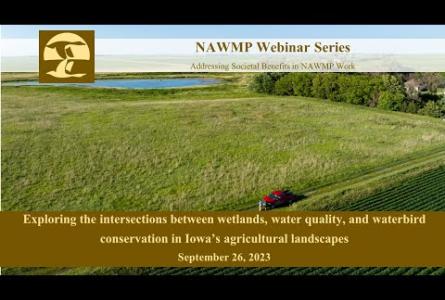
This webinar explores ongoing efforts in Iowa to use constructed wetlands to mitigate nutrient pollution and presents research on their use by breeding birds.
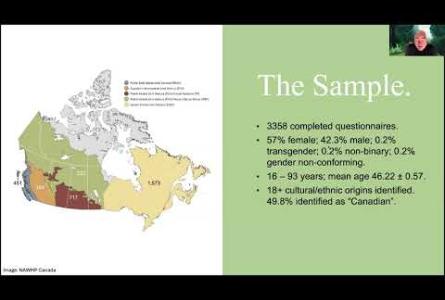
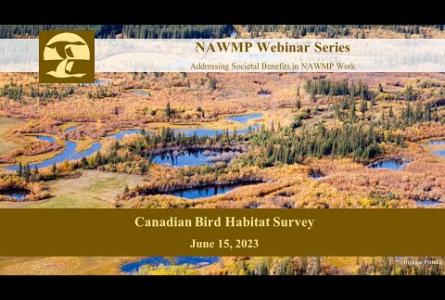
This national survey of 3,370 Canadians explores perceptions of and experiences with wetlands and other bird habitat settings across the four habitat Joint Venture regions.
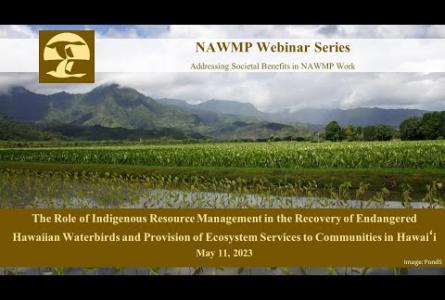
This presentation discusses the history of Hawaiian wetland management and how revitalizing traditional adaptive resource management can support the recovery of endangered waterbirds.
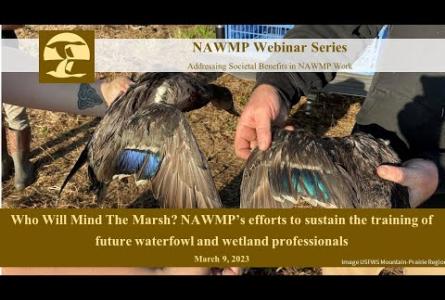
This webinar provides an update on the North American Waterfowl Professional Education Plan (NAWPEP) and seeks input on future directions for training future waterfowl professionals.
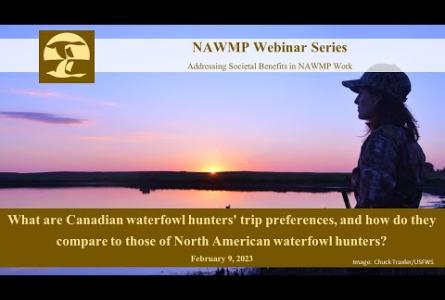
This survey of Canadian waterfowl hunters explores their hunting trip preferences and compares them to those of North American waterfowl hunters more broadly.
This doctoral research explores the stewardship potential of key stakeholders who use Michigan DNR wildlife management areas intensively managed for waterfowl habitat and hunting.
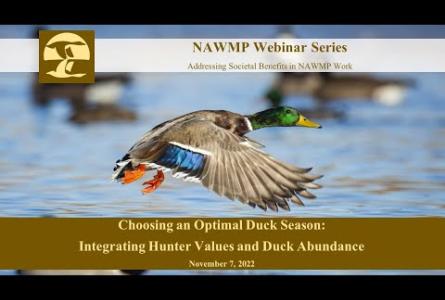
This presentation discusses integrating a human dimensions survey exploring hunter values with spatiotemporal abundance models to determine optimal duck seasons in New York State.
This webinar shows how wetlands conserved initially for bird habitat, like Michigan's Shiawassee National Wildlife Refuge, provide crucial flood protection and other benefits to nearby residents.
Since 2016, the Atlantic Coast Joint Venture has prioritized salt marsh habitat conservation around three flagship species, energizing the partnership and unlocking major funding opportunities.
This presentation describes a transparent framework for identifying and prioritizing landscapes for waterfowl habitat conservation at the watershed scale in Wisconsin.
This presentation highlights two NAWCA-funded restoration projects in north San Francisco Bay that provide shoreline protection, stormwater filtration, and recreational benefits.
This webinar features three presenters focused on connecting college and university students to hunting, including efforts to increase demographic diversity.
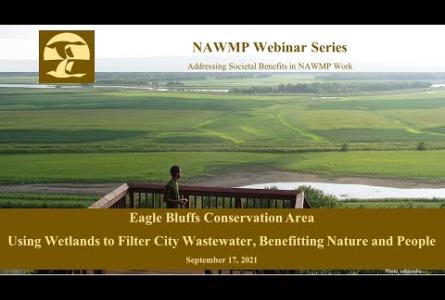
This webinar covers the 25-year history of Eagle Bluffs Conservation Area, a 4,431-acre Missouri wetland that uses treated city wastewater as its primary water source.
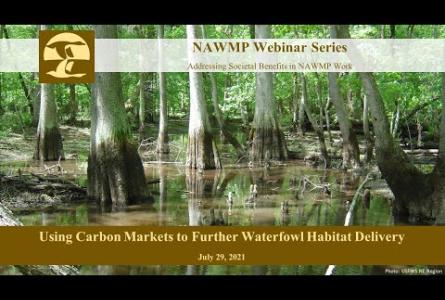
Ducks Unlimited has certified and transacted more grassland carbon credits than anyone else in the world; this webinar covers how they've navigated the dynamic carbon markets.
The USA Rice-DU Stewardship Partnership, formed in 2013, works to bring about long-term improvements to waterfowl, working rice lands, and water across priority wintering landscapes.
This webinar evaluates a "2-tiered" duck regulation system designed to lower the barrier to entry for prospective duck hunters in South Dakota and Nebraska.
The Intermountain West Joint Venture's Water 4 initiative focuses on conserving working wet meadows and water for agriculture, wildlife, fisheries habitat, and landscape resiliency.
A multiphase research project on wetland loss in the Broughton's Creek watershed shows that the future of Lake Winnipeg depends on a greater understanding of wetlands.
This is the story of how the Playa Lakes Joint Venture linked its playa conservation mission to the consequences of a declining aquifer, creating solutions for both humans and wildlife.