Find a Resource

NAWMP 4OTH Anniversary English Representative Logo

40th Anniversary Logo for the North American Waterfowl Management Plan - EPS Format

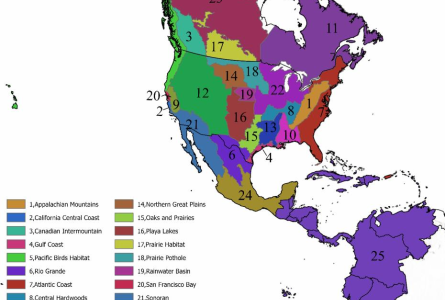
Map of North American Waterfowl Management Plan Joint Venture boundaries across Canada, the U.S., Mexico, and Central America, used in the report's regional population step-down analysis.

A new NSST method uses eBird citizen science data to translate continental waterfowl population goals into Joint Venture-level conservation targets.

North American Waterfowl Management Plan - 2024 Update

Published in 2024, this Update reviews progress since the 2018 Update, reaffirms the three core NAWMP goals, and charts a path forward by expanding and diversifying partnerships to reverse ongoing habitat loss and achieve conservation at the scale required.

2018 North American Waterfowl Management Plan Update: Connecting People, Waterfowl, and Wetlands

This Update reviews six years of progress since the 2012 Revision and 2014 Addendum. It reaffirms the three core NAWMP goals — abundant and resilient waterfowl populations, sufficient wetlands and habitats, and growing numbers of hunters, viewers, and supporters — and demonstrates how the waterfowl community is integrating biological, habitat, and human-dimensions objectives.

Revised Objectives: An Addendum to the 2012 North American Waterfowl Management Plan

The 2012 NAWMP Revision recommended developing, revising, or reaffirming objectives so all facets of waterfowl management share a common benchmark. Work in 2013–14 produced this addendum, which sets revised objectives for populations, supporters, and habitat.

2012 North American Waterfowl Management Plan

This landmark trilateral revision — signed by the environment ministers of Canada, the United States, and Mexico — updates the original 1986 North American Waterfowl Management Plan after 25 years of on-the-ground success. It celebrates the protection and restoration of 15.7 million acres (63,000 km²) of wetlands, grasslands, and other key habitats while confronting new 21st-century realities: climate change, habitat loss, shifting land-use pressures, declining hunter participation, and the need for broader public engagement.

Action Plan - A Companion Document to the 2012 North American Waterfowl Management Plan

The 2012 NAWMP Action Plan was published as a companion to the North American Waterfowl Management Plan Revision. It provides strategic guidance and initial steps for implementing the Plan's expanded vision across Canada, Mexico, and the United States.

Future of Waterfowl Management Workshop Report

In August 2008, NAWMP convened 192 experts and stakeholders in Minneapolis for a workshop on strengthening the links between harvest management, habitat conservation, and human dimensions. The discussions built strong support for a dedicated Human Dimensions Work Group and helped shape priorities for the next Plan update.

2007 North American Waterfowl Management Plan Continental Progress Assessment Final Report

The North American Waterfowl Management Plan Continental Progress Assessment Final Report represents the first comprehensive continental biological evaluation of the Plan's 20-year history since its inception in 1986. Commissioned by the Plan Committee in 2005, this assessment was led by an international Assessment Steering Committee (ASC) comprising experts from Canada, the United States, and Mexico.

Report from the Joint Task Group for Clarifying NAWMP Population Objectives and their Use in Harvest Management

In 2007, a Joint Task Group of scientists and managers proposed a framework for reconciling NAWMP's population objectives with harvest management, introducing a "shoulder strategy" to align habitat and harvest goals. The report's recommendations, including a new Human Dimensions Working Group, helped shape the 2009 Plan Update.

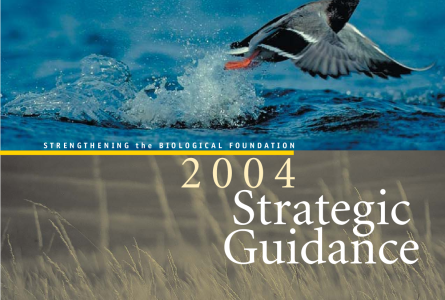
2004 Strategic Guidance - Strengthening the Biological Foundation - North American Waterfowl Management Plan

The 2004 Strategic Guidance for the North American Waterfowl Management Plan (NAWMP) serves as a renewal of the original 1986 plan, building on updates in 1994 and 1998 to outline needs, priorities, and strategies for the next 15 years.

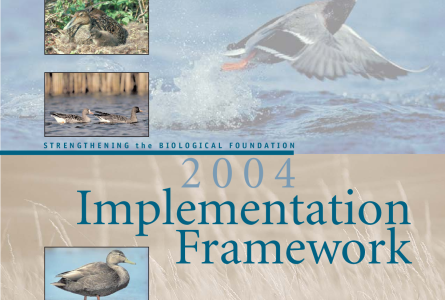
2004 Implementation Framework - Strengthening the Biological Foundation - North American Waterfowl Management Plan

The 2004 Implementation Framework for the North American Waterfowl Management Plan (NAWMP), titled "Strengthening the Biological Foundation," serves as a companion to the Strategic Guidance document, providing detailed technical information for biologists and managers to advance waterfowl conservation over the next 15 years.

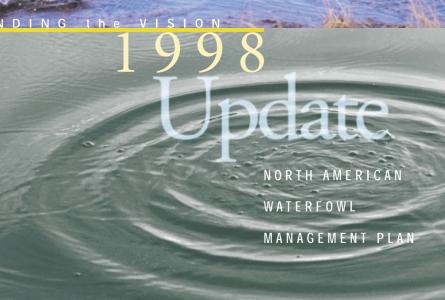
Cover Art for 1998 NAWMP Update

The 1998 Update to the North American Waterfowl Management Plan (NAWMP), titled Expanding the Vision, built upon the foundational 1986 agreement signed by Canada and the United States, as well as Mexico's inclusion as a signatory in 1994.

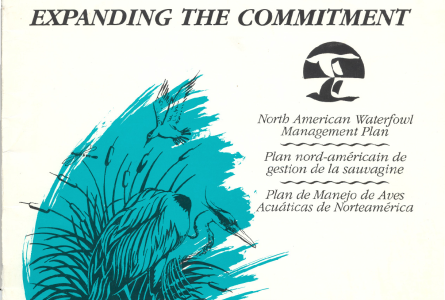
1994 Update to the North American Waterfowl Management Plan: Expanding the Commitment

The 1994 Update to the North American Waterfowl Management Plan, titled "Expanding the Commitment," marks the first revision of the 1986 Plan, extending its vision through 2001 and beyond while incorporating Mexico as a full partner alongside Canada and the United States. This trinational accord reaffirms the Plan's core purpose: to restore waterfowl populations through wetland ecosystem management, conserve biological diversity in the Western Hemisphere, integrate wildlife conservation with sustainable economic development, and foster public-private partnerships. By addressing ongoing habitat losses and population declines, the Update emphasizes ecosystem-based approaches that benefit not only waterfowl but also broader environmental health, water quality, and human communities reliant on these resources.

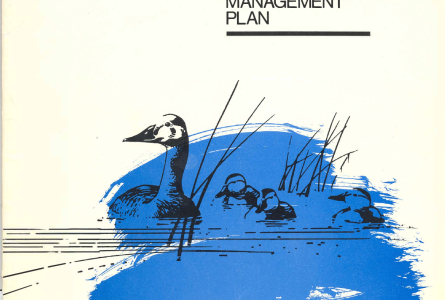
Original 1986 North American Waterfowl Management Plan

The North American Waterfowl Management Plan, released in May 1986, served as a cooperative strategy between Canada and the United States to conserve ducks, geese, and swans across the continent, emphasizing the protection and restoration of wetlands amid ongoing habitat loss from agriculture, urbanization, and other human activities.