Publication Date
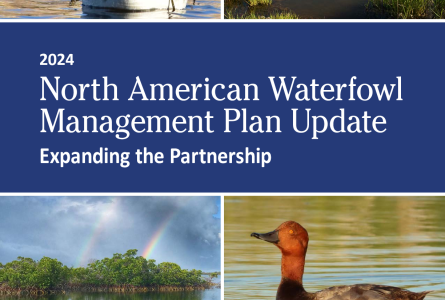
Published in 2024, this Update reviews progress since the 2018 Update, reaffirms the three core NAWMP goals, and charts a path forward by expanding and diversifying partnerships to reverse ongoing habitat loss and achieve conservation at the scale required.
Reaffirmed Goals
- Populations: Abundant and resilient waterfowl populations to support hunting and other uses without imperiling habitat.
- Habitat: Wetlands and related habitats sufficient to sustain waterfowl populations at desired levels, while providing places to recreate and ecological services that benefit society.
- People: Growing numbers of waterfowl hunters, other conservationists, and citizens who enjoy and actively support waterfowl and wetlands conservation.
Key Updates and Priorities
- Populations: Minor refinements to long-term average (LTA) objectives (1974–2023 for TSA; expanded eastern coverage 1998–2023); new/updated objectives for some sea ducks, mottled ducks, geese, and swans; formal 10-year review cycle established. • Habitat: Emphasizes stepping down continental objectives to JV landscapes; highlights successful multi-benefit projects (e.g., irrigated lands in the Intermountain West JV, wetland policy wins in Manitoba’s Prairie Habitat JV).
- People: Reaffirms people as both a fundamental and means objective; calls for a strategic human-dimensions plan, broader engagement (including Indigenous communities and agricultural producers), and communication of multiple benefits (clean water, flood reduction, carbon sequestration, recreation).
- Integration and Climate: Stronger focus on aligning habitat/population/people objectives, incorporating climate change adaptation, and professional development through the North American Waterfowl Professional Education Plan.
Path Forward
The Update stresses “expanding the partnership” to include diverse new supporters and funding sources by demonstrating the broad societal benefits of waterfowl habitat conservation. It provides specific priority recommendations for each goal area and reinforces the principle of thinking continentally while acting locally to sustain waterfowl, resilient wetlands, and growing public support amid accelerating habitat loss and changing social-ecological conditions.
